
Thermal Barrier Coating in Draper, Utah
High-Performance Exterior Systems for Homes Exposed to Heat, Wind, and Elevation
Draper sits in a transition zone—where valley development meets open mountain exposure.
Homes near SunCrest, along the Traverse Ridge corridor, and throughout neighborhoods by Corner Canyon experience a combination of wind, elevation, and rapid temperature shifts that put constant pressure on exterior materials.
Unlike sheltered urban areas, Draper properties often face prolonged sun exposure, dry air, and dramatic swings in heat and cold within a single day. This creates ongoing thermal cycling, where surfaces repeatedly expand and contract.
Over time, this movement introduces thermal stress into the exterior envelope—one of the leading causes of coating breakdown.
That’s why thermal barrier coating systems are becoming increasingly relevant for homes in Draper.
Thermal Barrier Coating: A Performance Layer, Not Just a Finish
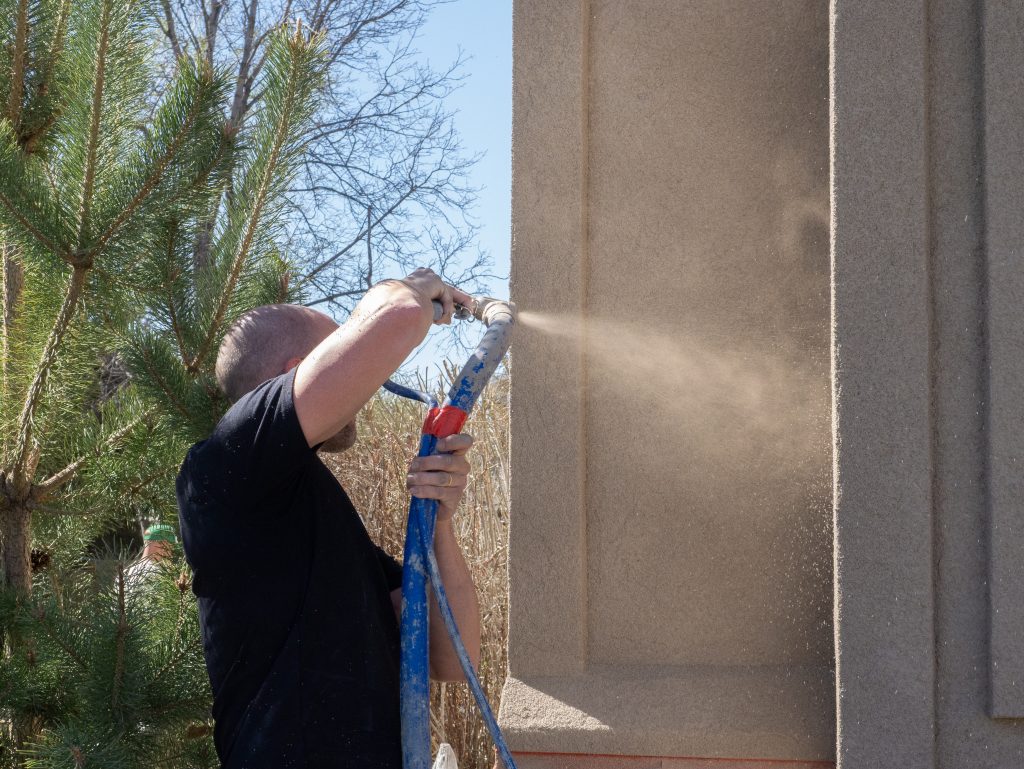
A true thermal barrier coating is engineered to do more than sit on the surface. It acts as a control layer that reduces heat transfer, limits thermal conductivity, and protects the underlying substrate from environmental exposure.
In advanced thermal barrier coating applications, such as those used in high-performance mechanical systems, coatings are built in layers. A bond coat anchors the system to the substrate material, while an outer insulating layer—often a ceramic coating—provides protection against high temperature and extreme heat.
These coatings are applied using highly controlled processes like thermal spray coating, thermal spray, plasma spraying, and air plasma spray, where a heated coating material is projected onto a surface to achieve consistent adhesion and precise coating thickness.
Although residential buildings do not experience turbine-level gas temperatures, the same principles of materials science apply. Exterior walls are constantly exposed to shifting temperature, and without a functional thermal barrier, that energy moves directly into the structure.
Why Draper’s Environment Accelerates Material Fatigue
Draper’s geography creates a different kind of wear pattern compared to other parts of the Wasatch Front.
At higher elevations near SunCrest, exterior surfaces are exposed to stronger UV radiation and cooler air temperatures. In lower areas near I-15 and Bangerter Highway, surfaces absorb and retain more heat throughout the day.
This contrast creates frequent thermal shock conditions, where materials rapidly change temperature in short periods of time.
These shifts lead to repeated thermal expansion and contraction, which over time causes thermal fatigue. Rigid coatings struggle under this type of stress, especially when subjected to extreme temperatures and continuous movement.
Every exterior material has a measurable level of thermal conductivity—its ability to transfer heat.
When conductivity is high, heat flows quickly through the surface and into the wall assembly. When conductivity is low, heat movement slows, reducing energy loss and stabilizing interior conditions.
A well-designed thermal barrier coating focuses on achieving low thermal conductivity, allowing it to reduce heat transfer while maintaining structural integrity.
This becomes especially important in Draper, where daily and seasonal temperature fluctuations are more pronounced than in many surrounding cities.
Serving All of Utah
VIPEQ® proudly serves:
- Salt Lake County
- Utah County
- Davis County
- Weber County
- Washington County
Including:
Salt Lake City
West Valley City
South Jordan
Provo
Orem
Ogden
St. George
Layton
Leh
Draper
Sandy
Herriman
Cedar City
From northern Utah freeze-thaw cycles to southern Utah desert heat, our stucco repair solutions are engineered for statewide performance.
No matter where you’re located in Utah, your stucco repair receives the same commitment to durability and proper installation support.
How Thermal CorkShield™ Applies Thermal Barrier Principles
VIPEQ® Thermal CorkShield™ is designed to function as a residential-grade thermal barrier coating by combining flexibility with advanced thermal performance.
Rather than relying on rigid, high-temperature ceramic thermal barrier coatings or systems like YSZ coating, which are typically used in industrial environments, Thermal CorkShield™ creates a flexible, breathable coating layer that adapts to building movement.
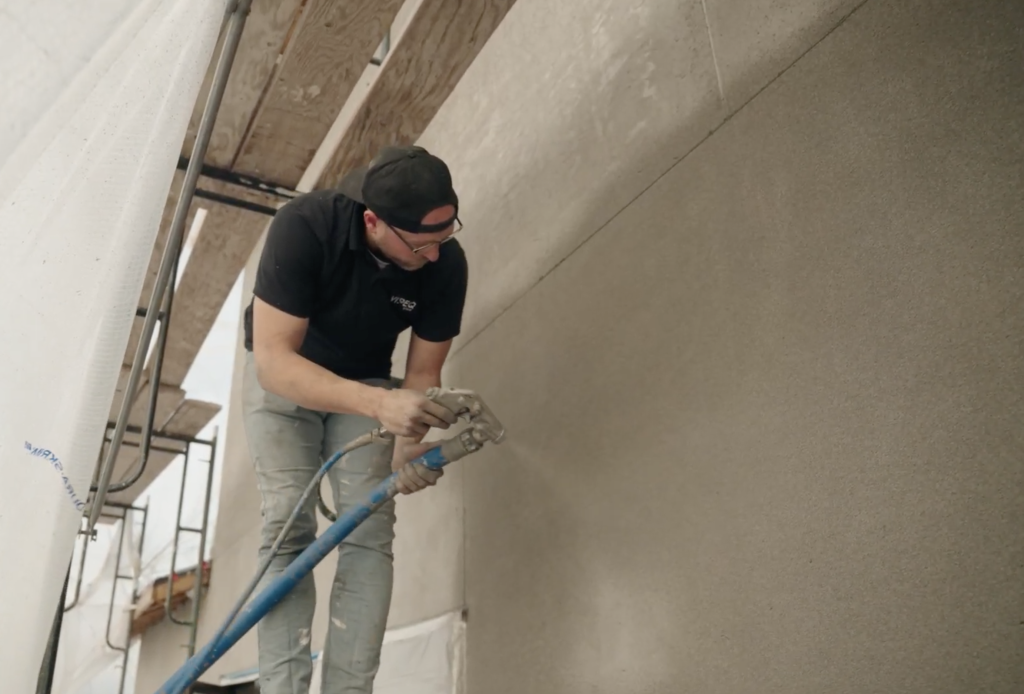
This coating material forms a continuous protective surface across the substrate, helping reduce heat transfer, maintain reduced thermal conductivity, and improve overall thermal efficiency.
Because it remains flexible, it performs well under thermal cycling, maintaining adhesion and performance even as the structure expands and contracts.
In Draper, exterior materials are constantly exposed to changing temperature conditions that trigger thermal shock.
Morning shade followed by direct afternoon sun.
Cool evenings after prolonged heat exposure.
These shifts create stress within the coating and the underlying substrate material.
Rigid systems often develop microfractures under this pressure, especially when exposed to repeated thermal expansion cycles.
Thermal CorkShield™ offers improved thermal shock resistance, allowing the coating to absorb these changes without compromising performance.
From Industrial Coatings to Residential Application
In industrial settings, coatings must withstand elevated temperature environments, high operating temperature ranges, and extreme gas temperatures. These systems often involve complex layering, including a bond coat, a ceramic layer, and the formation of a thermally grown oxide to improve adhesion.
Processes such as chemical vapor deposition and HVOF coating are used to apply these coatings with precision.
While these methods are not practical for residential use, the underlying goal remains the same: controlling heat, protecting the substrate, and improving longevity.
Thermal CorkShield™ brings these concepts into residential construction through simplified, effective coatings technology designed specifically for homes.
Why Substrate Protection Matters
Every coating system relies on its ability to protect the underlying substrate.
In residential construction, this may include:
- Masonry
- Concrete
- Composite wall systems
Without proper protection, repeated exposure to heat, moisture, and temperature changes can degrade the substrate material over time.
A high-performance thermal barrier coating helps shield these surfaces while maintaining breathability and long-term durability.
Thermal Performance Across Draper’s Landscape
Homes in Draper are rarely uniform in exposure.
Properties along Traverse Mountain experience higher wind and sun exposure, while homes closer to Draper City Park or residential neighborhoods near 1300 East may experience more moderate conditions.
This variation means exterior coatings must perform consistently across different environments.
A properly engineered thermal barrier ensures that performance remains stable regardless of location, orientation, or exposure level.
Thermal Efficiency and Long-Term Value
Reducing thermal conductivity at the surface level contributes directly to improved thermal efficiency across the building envelope.
By limiting heat transfer and stabilizing surface temperature, a thermal barrier coating can help reduce energy demand while improving overall comfort.
This makes it not just a protective layer—but a performance upgrade.
Digital Experience & Transparency
To improve your browsing user experience, this website may use cookies and tools like Google Analytics to analyze activity during each session. These tools may support limited targeted advertising, and preferences can be managed at any time.
A Smarter Thermal Barrier Coating for Draper Homes
If you’re searching for a thermal barrier coating in Draper, you’re likely looking for more than a standard exterior finish.
You need a system that can handle movement, reduce heat transfer, and perform under real-world conditions.
VIPEQ® Thermal CorkShield™ delivers a modern solution built for Draper’s unique environment—where temperature, elevation, and exposure all play a role.
Designed for performance.
Built for durability.
Cork it.