
Better Than Stucco; Thermal Corkshield in Salt Lake County
Why More Homeowners Are Moving Beyond Traditional Stucco
Drive through Salt Lake County—from the avenues above downtown Salt Lake City to newer homes in South Jordan or Herriman—and you’ll see one thing everywhere: stucco.
It’s been the default exterior finish across the western United States for decades. Most stucco homes are built using portland cement, sand, and lime, applied in layers over lath to create a textured stucco finish.
But here’s what many homeowners are starting to realize:
Just because stucco is common doesn’t mean it’s the best option anymore.
Upgrade Your Stucco Now
[display-map id=’4099′]
VIPEQ® proudly serves homeowners throughout Utah.
Serving Counties Across Utah
Our service areas include major counties and residential communities across the state.
Salt Lake County
Historic and modern homes where upgrading aging stucco can improve durability and long-term performance.
West Valley City
Large residential areas where homeowners are looking for alternatives to traditional stucco and paint.
West Jordan
Growing neighborhoods where exterior remodeling projects often include replacing stucco systems.
Sandy
Mountain-adjacent homes exposed to snow and temperature swings that challenge exterior materials.
South Jordan
Newer homes where long-term durability and aesthetic appeal are always key priorities.
Herriman
Rapid development and new construction where modern coating systems are gaining popularity.
Cottonwood Heights
Elevated homes with character where weather exposure demands stronger exterior protection.
Murray
Established homes where stucco repair is common, and alternatives are increasingly considered.
Millcreek
Renovation-heavy areas where improving exterior performance adds long-term value.
Holladay
Homes with distinct architectural style & sophistication where both finish and durability matter.
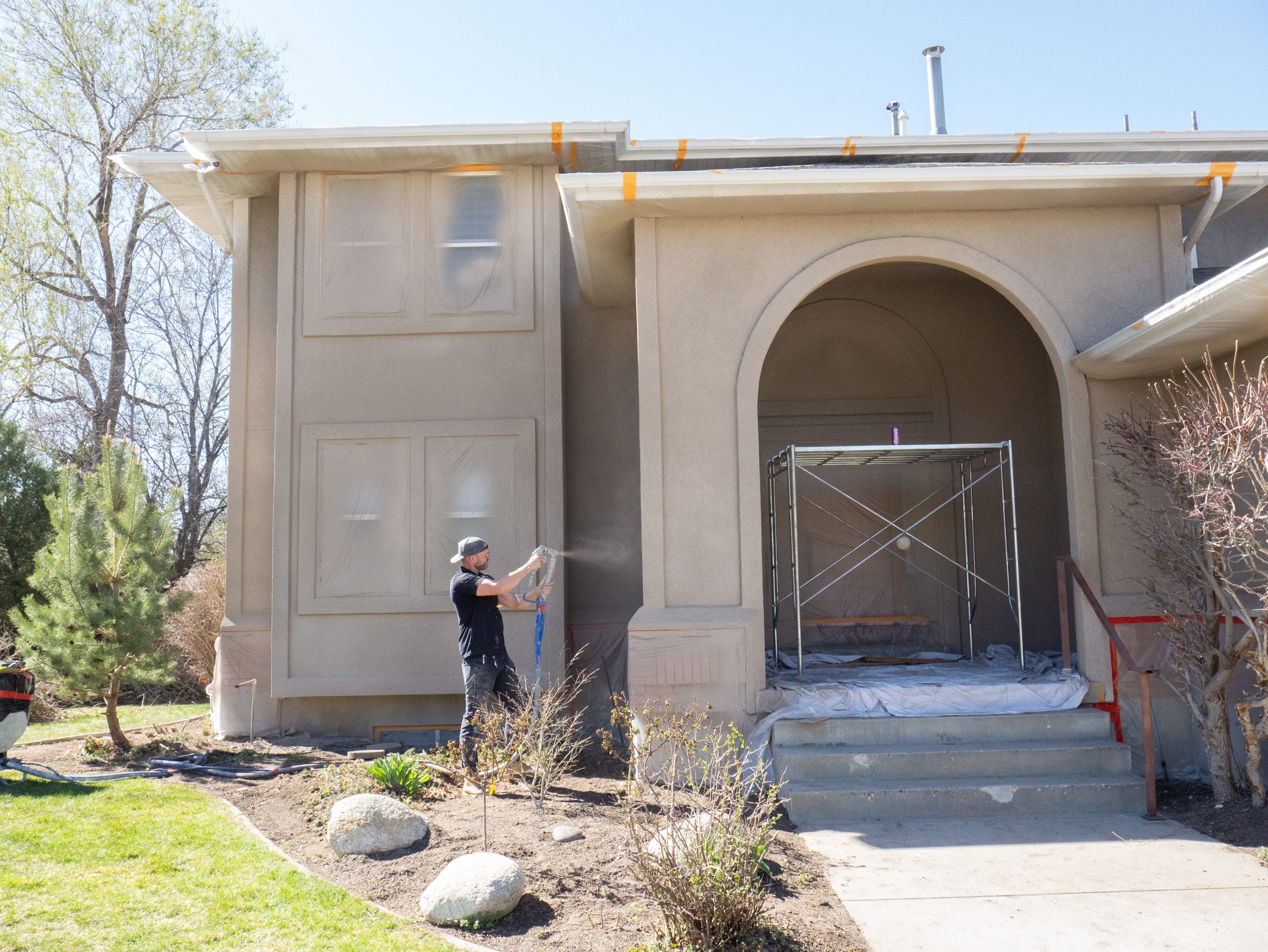
How Stucco Systems Actually Work
Most people don’t realize how complex stucco systems really are.
A typical stucco wall includes multiple layers:
- A scratch coat applied over metal lath or wood lath
- A brown coat that builds thickness using cement and sand
- A final finish coat that gives the stucco surface its texture
These layers form a rigid shell made from cement, plaster, and aggregates.
This method has been used across North America for years because of its versatility and classic architectural style.
But that same rigidity is also its biggest weakness.
What Happens to Stucco in Salt Lake County
Salt Lake County isn’t easy on exterior materials.
You get:
- Freezing winters with snow buildup
- Hot, dry summers with strong UV exposure
- Rapid temperature swings along the Wasatch Front
Rigid materials like traditional stucco don’t flex well under these conditions.
That’s when problems begin:
- Hairline cracks forming across the stucco surface
- Expansion and contraction stressing the coat layers
- Moisture and water entering through cracks
- Gradual breakdown of the plaster and cement structure
Even high-end acrylic stucco or painted finishes can’t fully prevent this cycle.
Why Cork Coatings Outperform Stucco
Traditional stucco focuses on structure and texture.
Cork coatings focus on performance.
Flexibility vs Rigidity
Stucco is rigid. Cork coatings flex with temperature changes, reducing cracks.
Moisture Management
Instead of trapping moisture, cork coatings are breathable while still protecting against water intrusion.
Durability
Cork coatings are designed for long-term durability without the same maintenance cycle required for stucco.
Energy Efficiency
By helping regulate surface temperature, cork coatings support improved energy efficiency.
Maintenance
Stucco often requires repainting or patching. Cork coatings minimize ongoing maintenance.
The Vipeq Advantage
The Real Issue: Moisture, Water, and Cracks
Once cracks form—even small ones—moisture becomes the biggest risk.
Water can move behind the stucco exterior and get trapped between layers of cement and lath.
Over time, this can lead to:
- Interior wall damage
- Deterioration of the base coat
- Reduced durability of the exterior system
- Repeated need for stucco repair
Most homeowners don’t notice the issue until the damage has already progressed.
A Different Approach: Not Stucco—Something Better
VIPEQ® Thermal CorkShield™ was designed to solve the exact problems stucco creates.
This is not another variation of stucco.
It’s not plaster, not cement, and not a traditional layered system.
Instead, it’s a flexible, breathable coating that forms a continuous protective coat over exterior surfaces.
It can be applied to:
- Existing stucco
- Masonry
- Concrete
- Other siding systems
And it’s used for far more than just replacing stucco.
More Than a Stucco Alternative
VIPEQ® coatings are used across multiple applications, including:
- Stucco repair upgrades
- Full stucco replacement
- Exterior remodeling projects
- Decorative wall finishes
- Coating for exterior walls
- Exterior wall insulation
Instead of rebuilding the entire wall system with cement and lath, this approach enhances the existing structure with a high-performance coating.
Designed for Salt Lake County Conditions
From foothill homes in Sandy to valley properties in West Valley, exterior walls in Salt Lake County face real environmental stress.
Cork coatings are built to handle:
- High UV exposure
- Freeze-thaw cycles
- Moisture and water exposure
- Changing surface temperatures
They also provide fire resistance, an added benefit for many homeowners in dry Utah climates.
Stucco was designed decades ago using materials like cement, lime, and sand layered over lath.
Modern building science has evolved.
Cork-based coatings represent a shift toward:
- Better moisture control
- Longer-lasting finishes
- Reduced maintenance cycles
- Improved user experience for homeowners
This isn’t just a new look—it’s a new way of thinking about exterior walls.
Not Just a Different Finish—A Different System
Upgrade Beyond Stucco
If you’re researching stucco in Salt Lake County, you’re already asking the right question:
Is there something better?
There is.
VIPEQ® Thermal CorkShield™ provides a modern alternative designed for durability, moisture management, and long-term performance—without the limitations of traditional stucco.
Cork it.